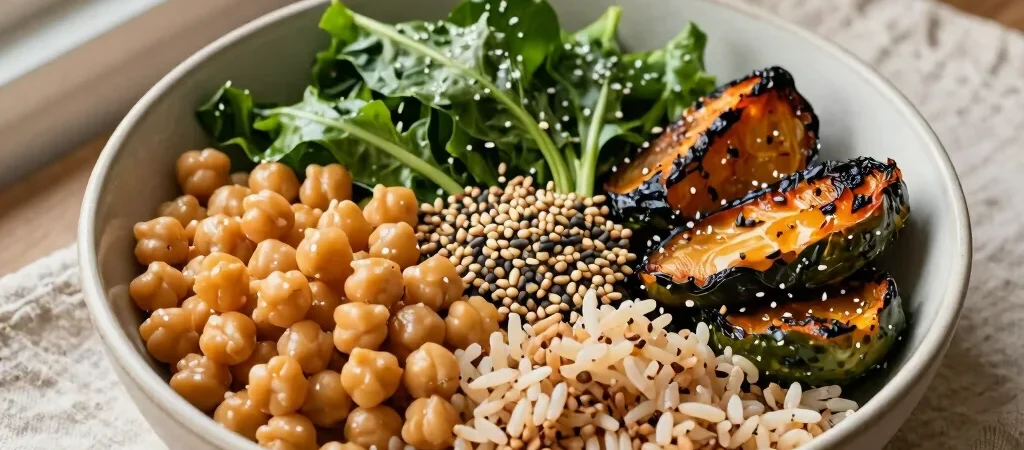
A vegan lunch could be a bean-and-grain bowl with vegetables, or a handful of chips eaten between meetings. Both avoid animal products; they do not offer the same mix of nutrients. If you are considering vegan eating, the advantage depends less on the label than on how you build your meals.
Build Around Filling Staples
Beans, lentils, tofu, tempeh, nuts, and seeds can all help make plant-based meals more satisfying. Pair them with foods such as whole grains, potatoes, fruit, and vegetables, choosing combinations that suit your budget and routine. A pot of beans or a batch of tofu can make it easier to put together a meal when time is short.
Eating more whole plant foods can also mean getting more fiber, which is found in foods such as beans, oats, fruit, and vegetables. But vegan products vary widely: a packaged meat alternative and a bowl of lentils are not nutritionally interchangeable. Looking at the whole pattern is more useful than assuming every vegan food is automatically nourishing.
Plan for Nutrients Too
Vitamin B12 deserves particular attention because reliable sources for people eating vegan are limited, so fortified foods or a supplement are commonly needed. Depending on your diet and circumstances, you may also need to think about nutrients such as calcium, iron, iodine, and omega-3 fats. Needs differ, so broad advice cannot replace guidance tailored to you.
If you have a health condition, are pregnant, or are planning a major dietary change, a registered dietitian or other qualified health professional can help you make a suitable plan. Vegan eating can work well for many people, but it is not a shortcut to guaranteed health. Start with balanced meals and a clear plan for the nutrients that require attention.